
The rise of smart buildings is reshaping the way developers and building owners evaluate HVAC systems. While investment decisions were once driven primarily by equipment performance and upfront costs, factors such as connectivity, data management, and energy optimization are becoming increasingly important.
As buildings move toward smarter operations and greater sustainability, HVAC is taking on a more strategic role in overall building energy management.
The Smart Building market continues to expand
According to Grand View Research, the global smart building market was valued at approximately USD 141.8 billion in 2025 and is expected to reach USD 164.7 billion in 2026. This growth is driven by the increasing demand for operational efficiency, wider adoption of IoT technologies, and global efforts to reduce carbon emissions.
Among various smart building applications, energy management is one of the fastest-growing segments, driving demand for HVAC systems with advanced connectivity and intelligent control capabilities.
Vietnam is accelerating its Smart Building adoption
In Vietnam, smart building solutions are becoming an increasingly important part of development strategies for office buildings, shopping centers, hotels, hospitals, and industrial facilities.
According to IMARC Group, Vietnam’s smart building market is expected to maintain annual growth of over 15% in the coming years, supported by rapid urbanization, growing demand for energy efficiency, and the expansion of green building initiatives.
At the same time, Vietnam’s commitment to achieving net-zero emissions by 2050 is encouraging investors to place greater emphasis on building performance and energy efficiency. Given that HVAC systems account for a significant share of a building’s energy consumption, smart HVAC solutions are increasingly viewed as a strategic investment rather than simply a technical requirement.
Many new developments are also prioritizing HVAC systems that can integrate with Building Management Systems (BMS), enable remote monitoring, and support real-time energy management to meet modern operational needs and green building standards.
What is changing in HVAC investment decisions?
The smart building trend is prompting investors to look beyond traditional criteria such as equipment cost and capacity.
Instead, factors such as integration with building management systems, operational data utilization, and energy performance optimization are becoming key considerations when selecting HVAC solutions.
This shift reflects the evolving role of HVAC—from a standalone engineering system to an integral part of the intelligent infrastructure that supports modern building operations.
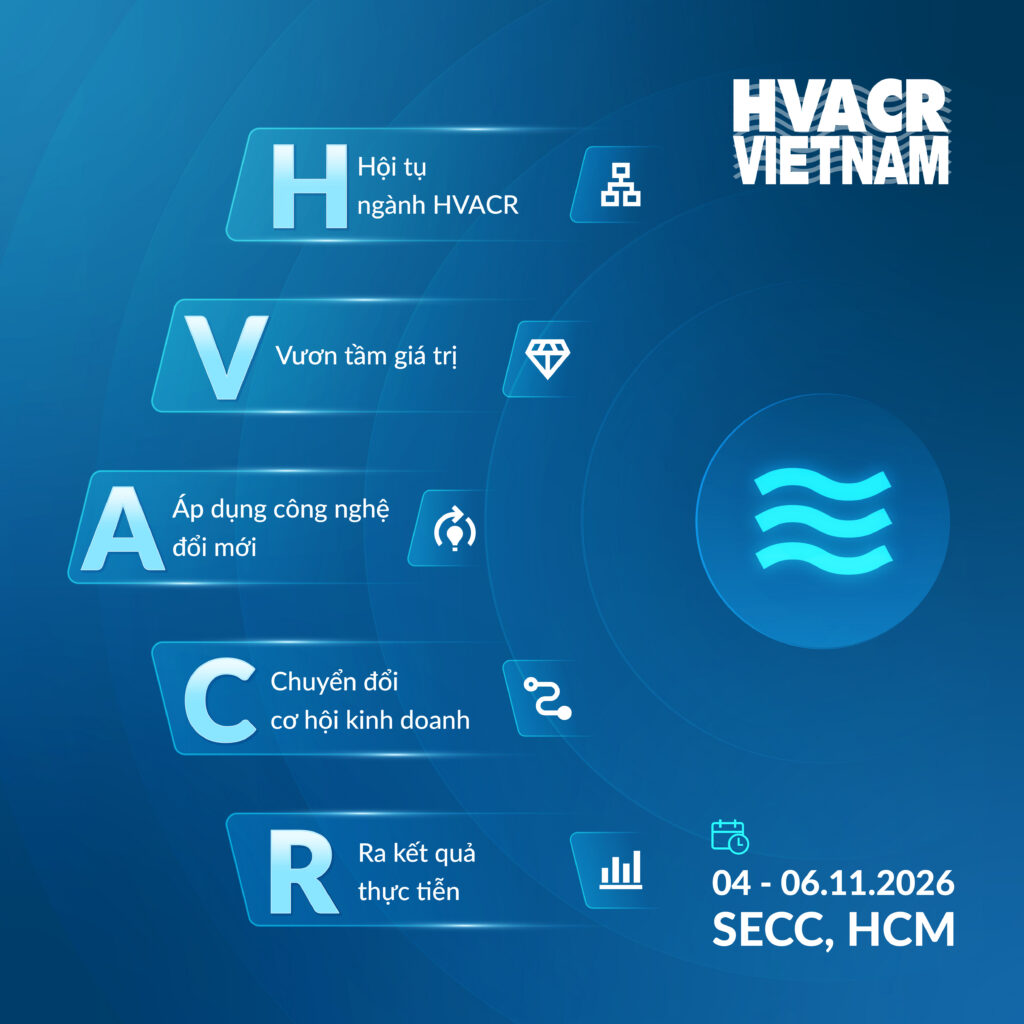
Connect with the HVAC and Smart Building market at HVACR Vietnam 2026
As smart buildings continue to reshape HVAC investment priorities, is your business ready to engage with customers seeking solutions for the next generation of buildings?
HVACR Vietnam 2026 offers a valuable platform to connect directly with developers, consultants, M&E contractors, facility managers, and industry stakeholders looking for smart, energy-efficient, and sustainable HVAC solutions.

HVACR Vietnam 2026 alongside Vietnam Energy Week and Vietnam Data Center Confex, provides a comprehensive platform connecting the HVACR, Energy and Data Center communities to directly tackle these challenges, with 10,000m² of space, 400+ exhibiting companies, and 16+ countries/territories participating.
Joining the exhibition helps businesses:
- Connect with partners across the entire value chain
- Understand trends and gain competitive advantages
- Expand international partnerships
- Improve investment strategies in a changing market
References: Grand View Research, IMARC Group, International Energy Agency (IEA), United Nations Environment Programme (UNEP), ASHRAE